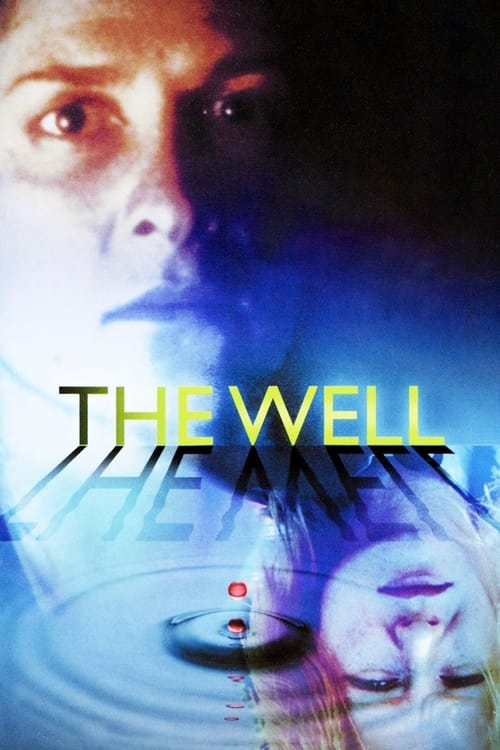
The Well
completed Subtext GL

The Well (1997)

aka Фантасты-предсказатели · Prophète de science fiction - Visionnaires · Die Science-Fiction-Propheten · 科幻小说预言家 · 科幻先知

8 ep AU Science 45 min/ep Drama

A young girl named Katherine and her older friend Hester live on an isolated farm run by Hester and her father Francis. Katherine works as a maid and wants to leave because there's too much work. Hester, however, becomes attracted to Katherine and holds her there, promising to give her less work in the future. When Francis dies, Hester decides to sell the farm for cash. They move to a small cottage on the edge of the farm and plan to go to Europe, but a tragic accident and the theft of their money changes their plans.

🏳️‍🌈 Samantha Lang's atmospheric Australian thriller explicitly centers its entire engine on Katherine and Hester, tracking their intensely close, secretive, and highly sáfic-coded emotional bond and isolated crime.

Cast

Episodios

Ep 1 · Mary Shelley 9 Nov 2011
Ver resumen

It’s alive! Mary Shelley set out to create a monster--along the way she created a masterpiece. In 1816, teenager Mary begins stitching together a patchwork of ancient legend, modern technology, and personal tragedy--giving life to her novel, Frankenstein...and the genre of science fiction.

Ep 2 · Philip K. Dick 16 Nov 2011
Ver resumen

Literary genius, celebrated visionary, paranoid outcast: Writer Philip K. Dick lived a life of ever-shifting realities straight from the pages of his mind-bending sci-fi stories. His books have inspired films like Blade Runner, Total Recall, and Minority Report. His ideas have influenced the development of real-life breakthroughs in everything from robotics to law enforcement. The brilliant, troubled sci-fi legend's work confronts readers with a deceptively simple question: What is reality?

Ep 3 · H.G. Wells 23 Nov 2011
Ver resumen

"I told you so..." H.G. Wells' self penned epitaph underscores a lifetime of grim--yet uncanny--prophecy. With stories like The Time Machine, The Invisible Man, The World Set Free, and The War of the Worlds, H.G. Wells established himself as a sci-fi writer of almost clairvoyant talent. But these tales of hi-tech adventure hold an ominous warning: beware the dark side of progress. Our greatest innovations could very well become the tools of our own destruction.

Ep 4 · Arthur C. Clarke 30 Nov 2011
Ver resumen

Some sci-fi storytellers are content to merely predict--but Sir Arthur C. Clarke creates. The writer is single-handedly responsible for the cornerstone of modern telecommunication technology: the satellite. Clarke’s collaboration with director Stanley Kubrick on the iconic 2001 predicted videophones, iPads, and commercial spaceflight--while redefining science-fiction cinema for a new generation. His sci-fi legacy inspires us to unveil the mysteries of the universe, confident in the knowledge that science is the new magic.

Ep 5 · Isaac Asimov 1 Feb 2012
Ver resumen

He saved the future from Evil Robots! Isaac Asimov dreamed a better future where we need not fear our own technology. His I, Robot stories of a sci-fi future where robots can do our jobs for us lead to the creation of real-life industrial robots--and paved the way for a robo-friendly world. Today, droid doctors save lives performing delicate spinal surgery, and automaton astronauts repair orbital stations in the vacuum of space. And it all started with Isaac Asimov's futuristic sci-fi vision: a robot in every home.

Ep 6 · Jules Verne 8 Feb 2012
Ver resumen

He put a man on the Moon in the Victorian Era. He criticized the Internet...in the 1863. Jules Verne is the ultimate futurist, with a legacy of sci-fi stories predicting everything from fuel cell technology to viral advertising. The extraordinary voyages of Jules Verne span from the center of the Earth to the surface of the Moon, inspiring art, industry, culture, and technology with an enduring question: Where can science take us?

Ep 7 · Robert Heinlein 15 Feb 2012
Ver resumen

Science fiction legend Robert Heinlein is a walking contradiction. His stories address themes of patriotism, and duty--while stressing the importance of personal freedom and expression. Heinlein's groundbreaking sci-fi stories like Starship Troopers and Stranger in a Strange Land continue to challenge readers with a steadfast theme: what is freedom?

Ep 8 · George Lucas 22 Feb 2012
Ver resumen

From Luke Skywalker's light sabre to Darth Vader's Death Star, the Star Wars franchise is one of the defining science fiction works of the later 20th century. George Lucas' prolific imagination has already inspired two generations of scientists and engineers to push the envelope of technology. By introducing computers into the filmmaking process, he changed the way movies are made, and the way we all see the future. Surprisingly, many fictional technologies from "a long time ago in a galaxy far, far away" are now becoming reality.

Related

The Real History of Science FictionHistory 101Eli Roth's History of HorrorExplainedJames Cameron's Story of Science FictionMind Field